

Listening can be more complicated than it seems at first. And apparently you know this already, because I had such nice response to our most recent episode talking about listening. So I wanted to follow it up today with some prompts to help you reflect on your listening, so you could take the next step if you wanted to. And think about your listening, yourself as a listener, ways to analyze your listening, so you can make the most of it.
Hi, everybody. This is 10 Minutes to Better Patient Communication from Health Communication Partners. Since 2017, we’ve been giving you inspiration and strategies to improve engagement experience and satisfaction. I’m Dr. Anne Marie Liebel, a researcher, consultant, and educator specializing in communication and education. This podcast makes space to dig into what it’s easy to take for granted about communication in our professional lives, especially in health care and public health, but increasingly across sectors because communication touches everything. We’re here to learn and get inspired. Most importantly, make the difference we got into our jobs to make.
If you like what you’re hearing, I’ve made something for you. New at HealthCommunicationPartners.com is our Learning Library. Yes, a freshly organized way to explore the content you’ve come to rely on. There’s clearer categories, better organization, and a single page you can go to to explore what’s here, even and especially when you’re not sure what you need. Visit healthcommunicationpartners .com.
Yes, our last episode was about listening. And what you typically might have heard about listening is, maybe part of rapport building, or as important to kindness, or as a communication technique. And this show takes an appraoch that says, “Yes! All of those, and much more.” And I’m leaning for listening on the research of Kathy Schultz. Schultz invites us to make listening not just something we do for a few minutes, but as key to our work. And that’s what that last episode was about, so I’ll go ahead and link to that in the show notes. This episode is kind of taking the next step. It invites you into this approach a little bit further, so your listening can be made more useful to you.
Now the idea for this episode also came from one of our most popular episodes, which is 12 reflective practice prompts. Now I’d gotten requests for more on listening so I thought, let’s combine those two. So i’m going to give you prompts about listening.
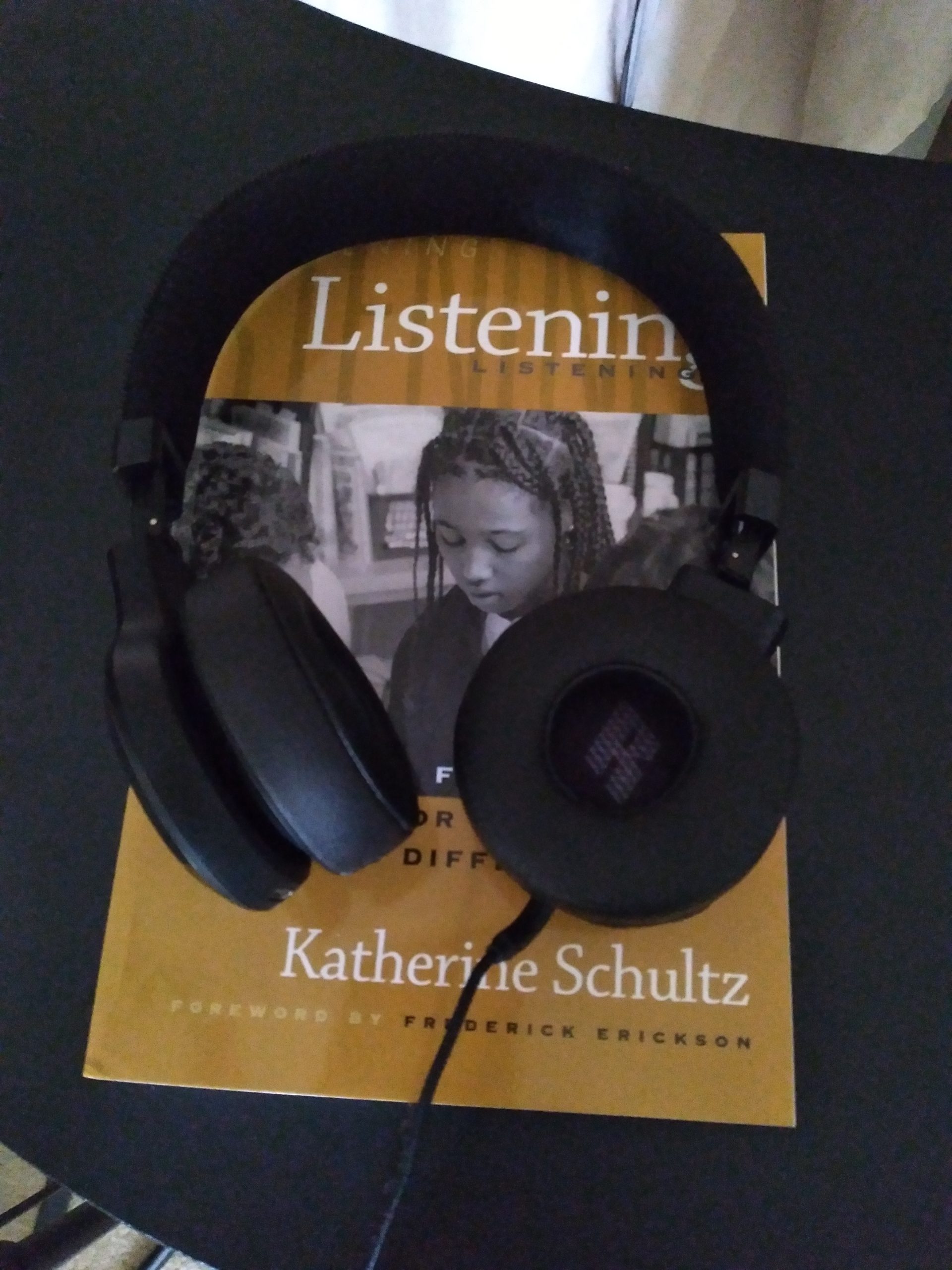
No, these are not AI generated, these are me-generated, as I thought about the requests that I’ve gotten, and the conversations I’ve had over the years, as I was going through Kathy Schultz’s excellent book, Listening: A Framework for Teaching Across Difference.
So we’re really listening and analyzing our listening, and how we think about listening. In keeping with Schultz’s book, these prompts are also going to include prompts on silence and silencing, because these are topics we might notice when we start to listen closely. And listening closely can give you new insights into the decisions you make. And I think for a lot of people, that’s what it comes down to.
Now in these prompts I mention patients/clients a few times, but these prompts can also apply to your conversations with colleagues, your direct reports, partners, vendors, other stakeholders you’re in conversation with. Beause really, we’re paying close attention to how we pay attention.
Also, like our earlier episode on the 12 reflective practice prompts, after each one of these there is kind of a follow-up question that you have. After you answer to yourself, you then ask the question “OK, so what? What are the implications of my answer for how I work? For my everyday?”
And in that, we’re really coming from a place of curiosity and observation, and analyzing ourselves but not being judgemental. There’s no preferred answers to these prompts. Some of them might be easier to answer than others. Some may lead to more questions. But every one of them is a tool to help you understand more about your decisions, by joining close listening with careful analysis.
- I want to start this list with a prompt that I did not write, but I heard–a clinician in a group I was teaching, a clinician generated this prompt as part of our activity. And I think it’s a great overarching question to set the tone of the rest of the list: “How am I thinking about my own talk? My own silence?” That’s a big one.
- What do I think it means to listen closely? How might that be different from ordinary, every day listening?
- What are my current beliefs about listening? What do I think the purpose(s) of listening are?
- What do I think are the relationships between listening and paying attention?
- Are there type of patients I find it hard to listen to, closely? Why might that be?
- Do I notice who tends to speak less, or not speak up, who is not often heard from? How do I typically deal with this?
- What do I typically listen for?
- Are there topics I find myself tuning out, or effectively silencing? What do I wish would get talked about more, or more openly?
- When or how do I listen for patients’ knowledge? What do I assume I will hear when someone understands something? What does understanding sound like to me? How could I listen for understanding being expressed in maybe unexpected ways?
- How do I react when I hear someone express a misconception or misunderstanding? How do I feel about listening to dissenting opinions when they come from a colleague? What about when they come from a patient?
- What do I tend to do when I sense a potentially difficult conversation approaching? Is listening involved?
- How comfortable do I feel listening for emotion? How comfortable do I feel when I hear emotion come into a conversation? How often do I listen for a subtle change in emotion? How do I know unease, trepidation, or reluctance when I hear it? What do I tend to do next?
- What do I think I’m trying to do with my listening when I listen? What do I suspect works and doesn’t work so well, in my listening?
- I know I gain knoweldge from listening to patients/clients. But when and how do I use that knowledge? How does it influence my decisions at various moments?
- What am I currently curious about in my own listening, or what am I interested about in my own practice that listening might be a part of?
I’ll bring this list to a close by asking you to pose a question of yourself. Something you are curious about, in order to temporarily focus your attention to try to discover something you are interested in understanding better that will help your practice. Again the follow up for every one of these prompt is, “What are the implications for my professional practice? Why might this be important for my work?”
Let yourself form a question around something in your work that you are curious about, that might be attached to listening. And let yourself ask that question once a day for a week, or one day a week for a month. And see what you turn up when you pay attention to your own listening.
If your group would like support on this, I can help. Find me on linked in or visit healthcommunicationpartners .com and click on contact. Also I want to put this out there: as I was going through Schultz’s book and jotting down some prompts, other kinds of prompts on listening started to occur to me. Like there’s a whole episode I could do on prompts to help you prepare for conversations or set intentions. Another one I could do on how to analyze your listening from an actual conversation. If this would be helpful to you, let me know! Again find me on linked in or visit HealthCommunicationPartners.com and click on Contact.
This has been 10 Minutes to Better Patient Communication from Health Communication Partners. Audio engineering and music from Joe Liebel, additional music from Alexis Rounds. Thanks for listening to 10 Minutes to Better Patient Communication from Health Communication Partners LLC. Find us at healthcommunicationpartners .com.